
Design Principles

When considering design principles in an emergent situation, reviewing course learning objectives as appropriate for the situation, clearly communicating any changes, and providing course content and materials around those stated outcomes is the most important step. If the course becomes available online for a longer term (or permanently), you can focus on designing your course around objectives from the beginning, and consider enhancing and optimizing course objectives to set yourself and your students up for success.
Beginner
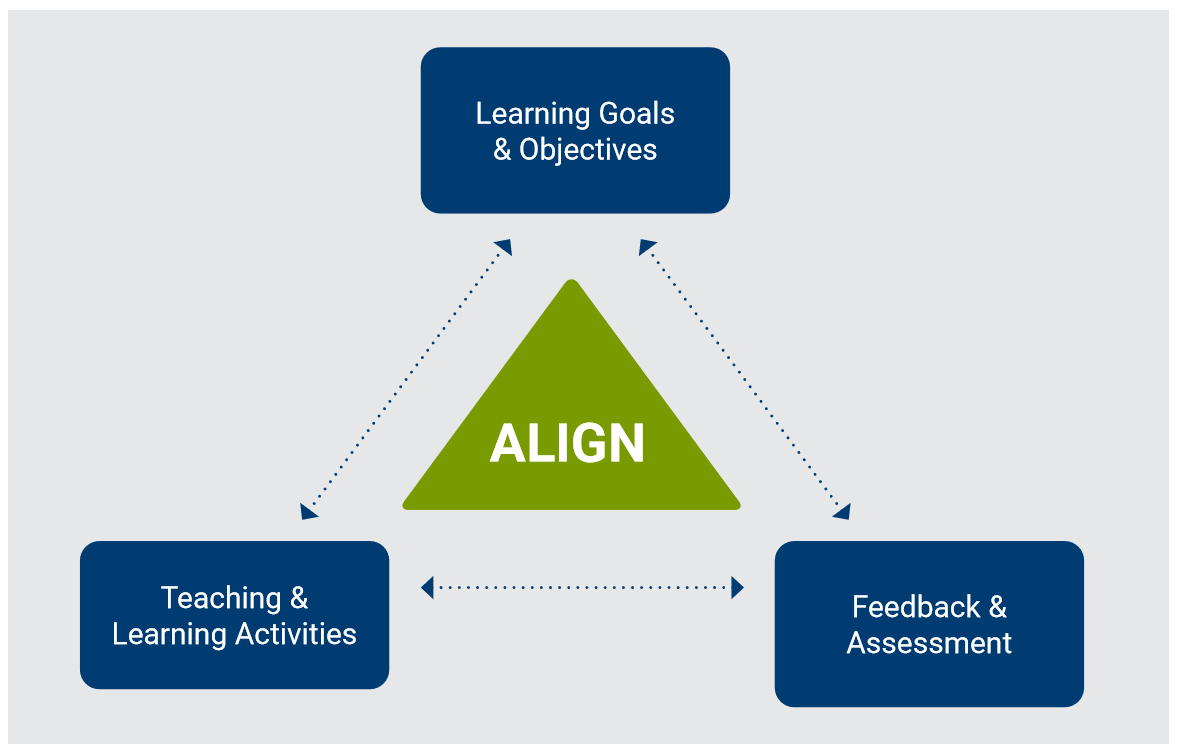
Review and Communicate Your Learning Objectives: Focusing the design of your course around well-written and measurable learning objectives/outcomes helps both students and instructors by providing a structure for the course and clear goals.
Intermediate
Quick option: Align content and assessments to learning objectives/outcomes
In-depth option: Use your learning objectives to create a “map” of your course that
shows an outline of the associated course content and learning
objectives. Mapping your course provides a template to organize content
and design for an effective teaching and learning experience.
Advanced
Evaluate your course design standards using this checklist. Evaluating quality is an essential part of continuous improvement, and using tools such as the Scorecard helps ensure that your course is in alignment with current best practices.