
Design Strategies
Completion requirements
Key Takeaways
1. What is Backward Design? (Watch this 2 mins 30 sec video).
2. Learn to apply a design model, such as Backward Design, which is widely applicable and is efficient and effective for any type of course development.

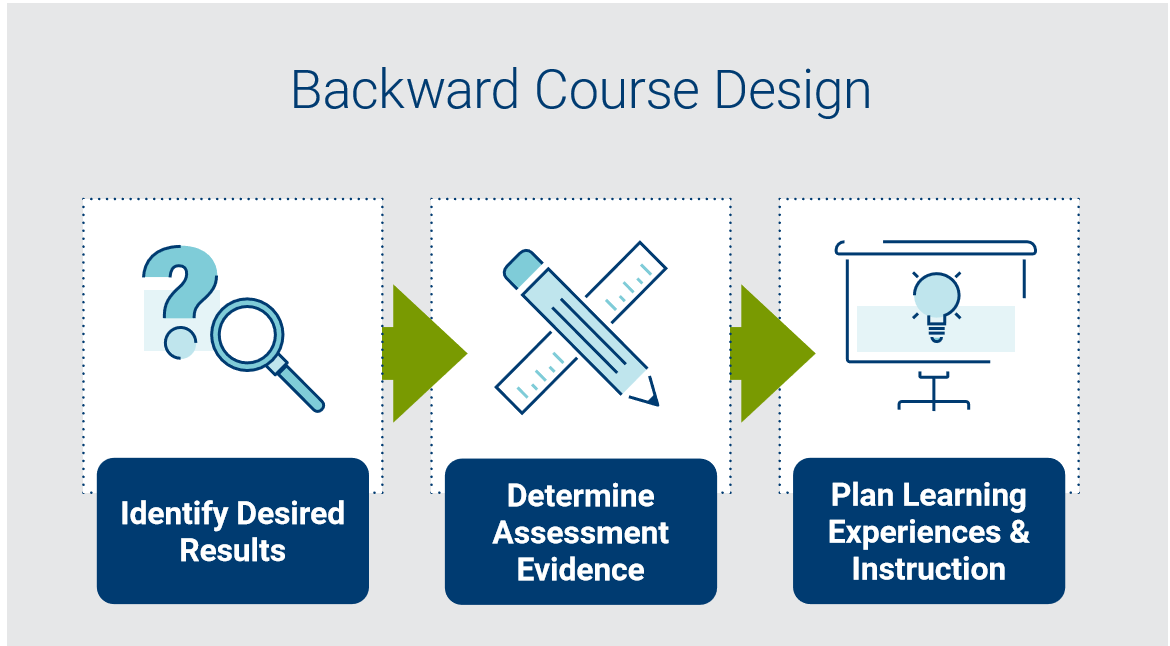
There are many approaches to instructional design, and you may find a good fit for your course and preferences in one or more strategies. It is important to select an evidence-based course design strategy, to ensure that you are using the most effective practices and enabling equitable learning outcomes for all students. An effective strategy that is adaptable to most course design needs and that provides a solid model for faculty at any level of experience with online course design and delivery is the Backward Course Design Model (Wiggins & McTighe, 2012).
This framework was developed by Grant Wiggins and Jay McTighe (2012) in their book Understanding by Design, and suggests that instruction should be developed first with the end goal (i.e, assessment of learning) in mind. Planning and development start at the end with the desired results or course outcomes, and the curriculum is derived from what is needed to achieve those results.
Beginner
Here is a short introduction to Backward Design, including a few simple questions to get you started.
Intermediate
As you begin a more in-depth and intentional process of course design, there are many resources to help you learn more about Backward Design and guide your course development. Here are two that you may find useful: Understanding by Design and Backward Course Design.
Advanced
Optimal course design is dependent on aligned learning outcomes, instructional activities, and assessments. As you evaluate your course for quality and best practices, following the Backward Design model can allow you to engage in continuous improvement in an effective, efficient way.
Last modified: Monday, July 6, 2020, 1:27 PM